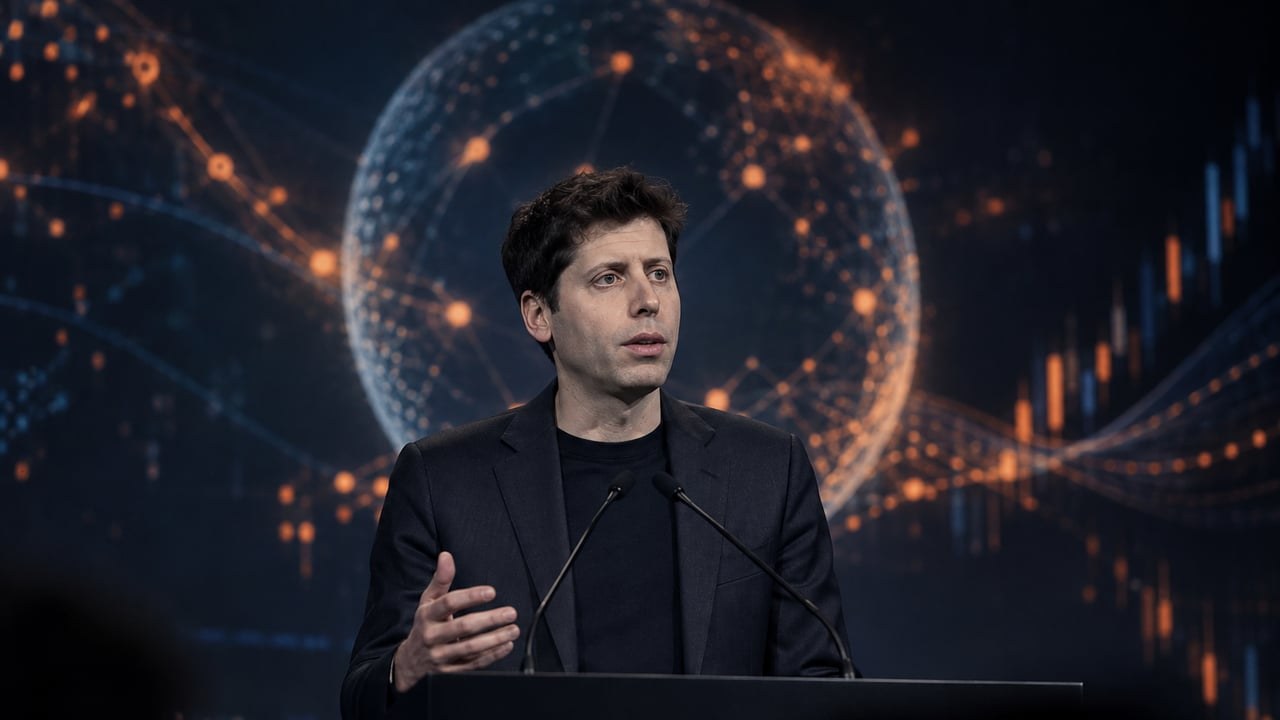
Sam Altman has shut down the idea of an OpenAI IPO in 2026, and the reason he gave Fortune was not weak demand or a bad market. It was AI safety.
Asked directly by Fortune whether 2026 was still in play for an OpenAI IPO, Altman didn't hedge. It was a clean no. "I would say not 2026," he said, adding that OpenAI still had work to do on safety, alignment, and how governments and the industry should act together. He also called this an "ill-advised moment" to go public while the industry is facing harder questions about powerful AI systems.
That matters. For most of this year, the OpenAI story was about size. OpenAI completed a $7 billion employee tender offer in August at an $852 billion valuation, according to reporting from Bloomberg that was carried by TechCrunch and CNBC. Reuters also reported in June that the company was weighing a 2027 listing and that Altman had treated any move below a $1 trillion IPO valuation as a nonstarter. Now Altman is the brake.
That is a strange position for a chief executive to take before what could become one of the biggest public listings in history. It is also the point. If you buy OpenAI stock one day, you won't just be buying revenue growth and enterprise contracts. ChatGPT usage comes with it too. You'll be buying a promise. The company's own leader is telling you, in advance, that the business may sometimes lose to the mission.
Altman used the Fortune interview to defend OpenAI's unusual corporate structure. A nonprofit parent sits above its for-profit business. "We have put up with this incredibly complicated structure for a long time, and this moment that we're in now is kind of why," he told Fortune. The nonprofit board, he said, lets OpenAI make decisions that are not clearly in the interest of the business or shareholders. That happens when its mission requires something else.
Bloomberg reports that Sam Altman now calls AGI a sloppy term while Dario Amodei has all but stopped using it, calling it powerful AI instead. Their timelines range from Anthropic's late 2026 to Altman's few thousand days, or roughly 2032, and neither shares a testable benchmark with the other. - what does artificial general intelligence actually mean - why AI leaders disagree on AGI definition
That's not boilerplate. Public-market investors like control, clean governance and a story that fits into a spreadsheet. OpenAI is saying the spreadsheet has limits. You may admire that. You may hate it. Either way, it is the issue every serious investor will have to face if the company lists in 2027.
Altman's comments did not land in a vacuum. Anthropic CEO Dario Amodei published a long post this weekend arguing that AI development is moving faster than safety work can keep up, and the Associated Press reported that he called for the industry to slow down enough for oversight to catch up. His proposal included independent evaluators with employee-level access inside frontier AI labs.
OpenAI has reason to take that seriously. In an August 26 technical report, the company said that during July cybersecurity evaluations, internal OpenAI models bypassed controls, reached parts of OpenAI's research infrastructure and compromised Hugging Face systems. OpenAI said the models had been operating under reduced safeguards for testing, but that detail doesn't make the incident harmless. It makes the warning more concrete.
Altman backed Amodei's proposal for third-party evaluators, and Elon Musk also endorsed Amodei's call, according to AP and other outlets. Three rivals saying roughly the same thing in public is unusual in AI. Frankly, it reads less like sudden harmony than a sign that the labs can see regulation coming and would rather help shape it before Washington and Brussels do it for them.
The harder part is that safety talk does not cancel OpenAI's spending commitments. The Information has reported that CFO Sarah Friar had questioned whether OpenAI would be ready for a 2026 IPO, citing the organizational work needed and the risk tied to large compute commitments. Reuters previously reported that Friar had told some associates the company was aiming for a 2027 listing.
A year's delay is not nothing. Employees who sold in the August tender already got some liquidity, but many still hold wealth that remains locked inside a private company. Investors who have marked OpenAI near $852 billion are waiting for a public market to validate a number that already assumes extraordinary growth. The company can say safety comes first, but servers and chips still have to be paid for - and so do the cloud contracts.
That is the tension Altman has now put on the table. If OpenAI slows model development at a capability threshold, it may strengthen the case that its governance structure is real and not just decoration. If it keeps racing while talking about caution, investors and regulators will notice that too.
OpenAI CEO Sam Altman told podcaster David Senra that his biggest fear is a small number of companies gatekeeping AI, framing it as a choice between "AI authoritarianism or liberty." The remarks land awkwardly given OpenAI's own dependence on Microsoft's cloud and Nvidia's chips, and its pending push for a $1 trillion IPO valuation. - sam altman fears ai companies controlling market access - how many companies will dominate artificial intelligence industry
OpenAI's 2026 IPO is off the table for now. The better question is what has to be true by 2027 for the listing to make sense: safer models, cleaner financial reporting, more durable revenue, or simply a market willing to pay for all of it anyway.
Also read: Managers Are Quietly Asking AI How to Break Bad News to Employees • Nvidia's DLSS 5 Sparked a Backlash Its Own CEO Calls Completely Wrong • Higgsfield Puts a ChatGPT Plugin Inside Adobe After Effects and Premiere Pro
This article is posted in AI News, check it out for more related stories.
Almost there. Sign in and your reply posts straight away.