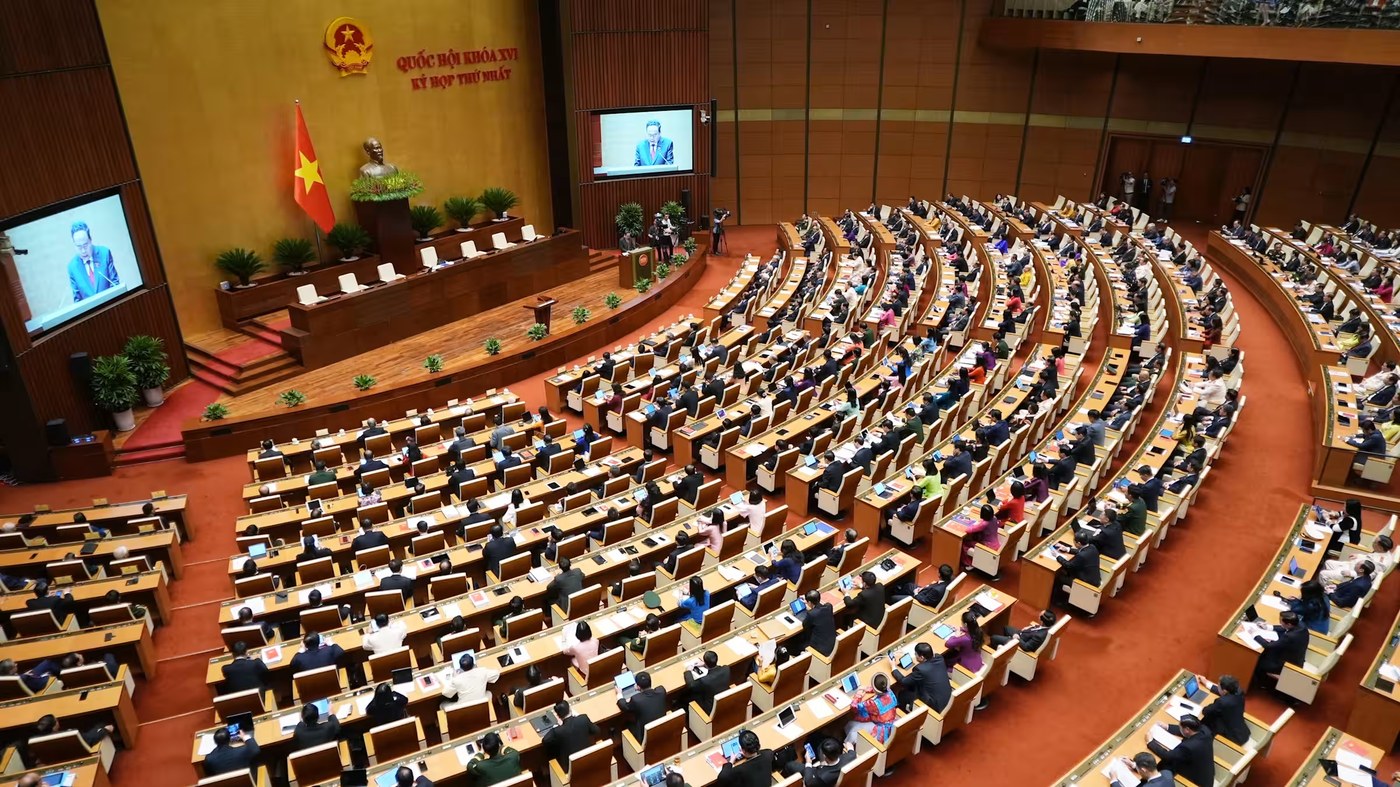
Vietnam will wrap up an extraordinary session of its National Assembly that began on Aug. 3 and has unfolded over two phases. Legislative topics have run from money laundering and agriculture to halting the proliferation of weapons of mass destruction, while the session is set to end with a strong focus on energy.
Chinese oil and gas companies will report earnings for a period when China's oil imports collapsed amid the U.S.-Israeli war on Iran, helping to contain the jump in global oil prices. The country's crude oil throughput -- the amount refined into usable fuels -- edged up in July from the previous month but was still down 15.8% on the year, data from the National Bureau of Statistics recently showed.
Get the best of our coverage of Asia and much more by following us on X, where our handle is @NikkeiAsia. We are also on Bluesky with the handle @asia.nikkei.com.
Last day of Vietnam National Assembly session
An extraordinary session of Vietnam's National Assembly comes to an end, with the body expected to approve an agreement related to the country's first nuclear power plant project in Ninh Thuan province, as well as special mechanisms to resolve obstacles facing some wind and solar power projects. Lawmakers are also scheduled to vote on proposals to establish Quang Ninh and Bac Ninh as centrally governed cities, along with special policies for projects supporting APEC 2027 on Phu Quoc island.
China Petroleum & Chemical Corporation, better known as Sinopec, holds a briefing to discuss its first-half results. The state refiner's assessments of the market in the shadow of the Iran war will set the tone for other fossil fuel companies due to report later in the week, including China National Offshore Oil Corporation and PetroChina.
The latest installment of the Nikkei Asia Forum will take place in Sydney, bringing high-level government, business and diplomatic figures to discuss key issues confronting Australia-Japan relations and broader developments in the region. Speakers include the secretary of Australia's Department of Foreign Affairs and Trade, the chair of Australia's Foreign Investment Review Board, the chair of Export Finance Australia, and the country's former Prime Minister Scott Morrison, as well as key figures from major banks, energy companies, hospitality and investment firms.
The Bank of Thailand will hold a monetary policy committee meeting to decide its policy rate. The country's growth slowed in the second quarter amid fallout from the Iran war, but most economists expect the central bank to keep the rate unchanged at 1.0%, according to a Reuters poll.
Bank of Japan Deputy Gov. Ryozo Himino will deliver a speech at a meeting with local leaders in Saitama prefecture, north of Tokyo. Markets will be parsing his remarks for clues on the central bank's policy outlook as expectations grow that upside inflation risks could prompt faster interest rate hikes. Any hint that a September move is on the table could send Japanese bond yields higher and strengthen the yen.
The Bangko Sentral ng Pilipinas convenes for its fourth policy meeting of the year to set the course for interest rates. The central bank faces renewed pressure from global economic spillovers driven by the Iran war. Currently at 4.75%, the country's chief monetary authority must decide how much support to offer the domestic economy.